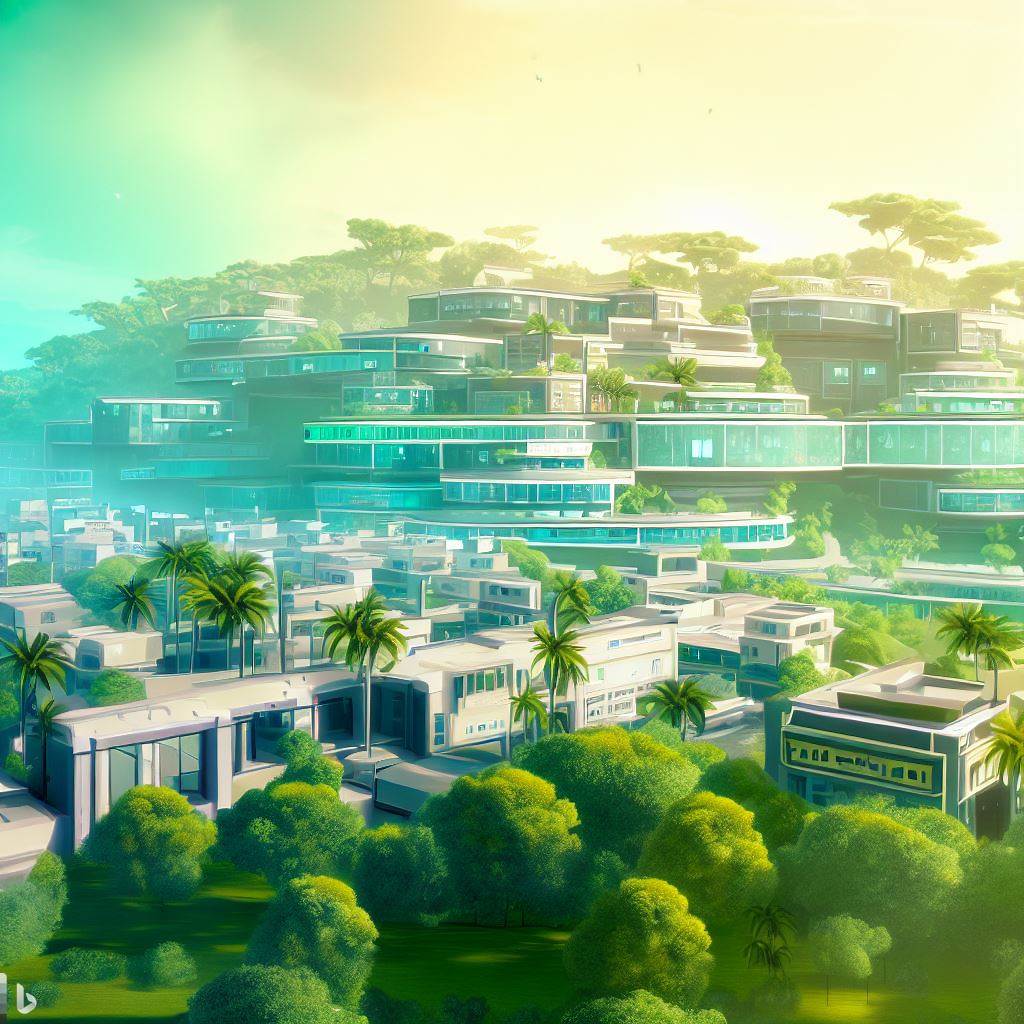
Educational Facilities
AESD (AI-Enhanced School District) Educational Plan
I. Overview
The AESD seeks to create an innovative and forward-thinking series of K-12 schools that integrate AI in the curriculum and instructional methodologies. The objective is to equip students with 21st-century skills, empower educators with advanced teaching tools, foster collaboration, and create a dynamic learning environment for students and staff.
II. Goals and Objectives
1. Develop students’ skills in critical thinking, creativity, collaboration, and communication.
2. Enhance student learning outcomes through personalized learning and adaptive instruction.
3. Prepare students for future careers in an AI-driven world.
4. Support educators in adopting AI-enhanced instructional methods.
5. Encourage collaboration between educators, scientists, and AI researchers.
III. Infrastructure and Equipment
1. Provide state-of-the-art AI-powered devices, software, and tools for classrooms and labs.
2. Offer high-speed internet connectivity throughout the campuses for seamless information access.
3. Develop smart classrooms with interactive whiteboards, virtual reality (VR) headsets, and other advanced equipment.
IV. Curriculum Development
1. Integrate AI concepts into core subjects (math, science, social studies, and language arts) across all K-12 levels.
2. Offer elective courses focused on AI, robotics, programming, and data science.
3. Develop project-based learning opportunities to engage students in solving real-world problems with AI applications.
4. Use AI-assisted assessment tools for real-time feedback and personalized learning.
V. Teacher Training and Professional Development
1. Conduct regular training workshops to educate teachers on AI technologies and their educational applications.
2. Partner with universities, industry experts, and AI researchers for training and collaboration opportunities.
3. Encourage teachers to attend conferences, workshops, and online courses to stay up-to-date with AI advancements.
VI. Co-Curricular Activities
1. Organize AI-related competitions and hackathons to inspire innovation.
2. Establish partnerships with local organizations and businesses to develop internships and mentorship programs.
3. Offer opportunities for collaborative projects between different schools in the AESD.
VII. Parent and Community Engagement
1. Host regular parent-teacher meetings to keep families informed about their child’s progress and AI-enhanced learning.
2. Offer community workshops on AI education and potential career paths for students.
3. Encourage community members to participate as guest speakers, mentors, and advisors.
VIII. Monitoring and Evaluation
1. Establish metrics for evaluating the success of the AI-integrated curriculum and instructional methodologies.
2. Collect and analyze data to assess student performance, engagement, and learning outcomes.
3. Adjust curriculum, teaching methods, and resources based on evaluation results to continually improve the AESD educational experience.
IX. Scaling Strategy
1. Start with a pilot program in selected schools and gradually expand to other institutions within the district.
2. Encourage collaboration and sharing of best practices between AESD schools.
3. Seek partnerships with other innovative school districts to further enhance AI strategies and methodologies.
b
Title: Ai-Enhanced School District – Specialized Learning Institutes
Objective: To provide students with a well-rounded education and foster interest and expertise in specific areas through specialized learning institutes in arts, sciences, technology, and sports.
I. Introduction
A. Background on the Ai-Enhanced School District
B. Purpose and goals of Specialized Learning Institutes
II. Organization and Management
A. Administrative structure: separate administrative teams to oversee each specialized institute.
B. Coordination with the main school district
C. Advisory board: Representatives from local industries, higher education, and parents to offer regular guidance and input.
III. Specialized Learning Institutes
A. Arts
1. Areas of focus: Visual arts, music, dance, theatre, and film.
2. Programs: Art history, theory, and technique, and hands-on studios or workshops.
B. Sciences
1. Areas of focus: Biology, chemistry, physics, earth sciences, and astronomy.
2. Programs: Experimental design, research, and capacity building, and access to specialized laboratories and equipment.
C. Technology
1. Areas of focus: Computer programming, robotics, artificial intelligence, web and app development, and cybersecurity.
2. Programs: Code learning platforms, hackathons, internships, and collaboration with local tech companies.
D. Sports
1. Areas of focus: Traditional team sports, individual sports and physical activities, and sports management.
2. Programs: Skill development, fitness improvement, teamwork, leadership, and sports psychology.
IV. Facilities and Resources
A. Location: Institutes strategically located to maximize accessibility and resource sharing.
B. Facility design: State-of-the-art facilities with classrooms, labs, studios, performance spaces, and sports facilities.
C. Resource sharing: Specialized learning institutes partner with local organizations, institutions, and industries for internships, field trips, and workshops.
D. Technology integration: Smart classrooms and e-learning platforms to support the educational process.
V. Curriculum and Teaching Methodology
A. Student-centered: Emphasis on experiential learning, project-based curriculum, and collaboration.
B. Cross-disciplinary approach: Encourage multidisciplinary projects and communication between different institutes.
C. Professional development: Faculty training and development focused on specialized fields and teaching methodologies.
D. Diverse learning pathway: Variable-duration programs and degree options, including certificates and diplomas.
VI. Student Enrollment and Support Services
A. Admission requirements: Based on merit and interest, admissions guidelines specified for each specialized institute.
B. Financial aid options: Scholarships, needs-based grants, and interest-free student loans to ensure accessibility.
C. Mentorship and guidance: Individualized support from professional faculty and experts in each field.
D. Counseling and student support services: Dedicated counselor for each institute to address academic, career, and emotional support.
VII. Assessment and Evaluation
A. Tracking student progress: Ongoing assessment through projects, presentations, and portfolios.
B. Performance evaluation: Regular feedback from students about faculty and curriculum.
C. Program review: Periodic evaluation of program effectiveness and adaptation of teaching practices based on feedback and industry trends.
VIII. Future Expansion and Improvement
A. Evolving curriculum: Continually review and revise courses and programs to reflect changes in industry and society.
B. Expansion possibilities: Exploration of new specialized institutes based on community interests and global trends.
C. Collaboration with other educational institutions: Develop partnerships with local and international educational institutions for exchange programs, joint projects, and research opportunities.
c
Title: AI-Enhanced School District – AI-Assisted Tutoring Centers Plan
I. Executive Summary
The AI-Assisted Tutoring Centers (AIATC) aim to provide personalized learning pathways for students in the AI-Enhanced School District. The centers will offer individualized tutoring with the help of AI technologies, providing high-quality support for students to achieve academic success. This plan outlines the key steps towards establishing these centers, including facility development, technology acquisition, hiring of staff, and curriculum alignment.
II. Development Timeline
1. Preliminary Planning & Research (Months 1-3)
a. Identify needs and potential challenges
b. Benchmark best practices from other AI-assisted tutoring models
c. Develop a detailed budget
2. Facility Development (Months 4-8)
a. Acquire or remodel suitable facility spaces
b. Develop IT infrastructure requirements
c. Customize classroom setups and furnishings
d. Ensure accessibility and safety standards
3. Technology Acquisition & Setup (Months 9-12)
a. Research and select AI technologies for tutoring
b. Negotiate contracts and costs
c. Work with vendors for training and installation
d. Establish ongoing tech support
4. Hiring & Staff Training (Months 10-15)
a. Develop job descriptions and qualifications
b. Recruit, interview, and hire staff
c. Train staff on AI technologies and best practices
d. Develop an onboarding process for new hires
5. Curriculum Implementation & Alignment (Months 13-16)
a. Collaborate with school district curriculum team
b. Develop and approve AI-driven learning pathways
c. Train staff on newly developed curriculum
d. Integrate learning strategies with classroom instruction
6. Pilot Launch and Continuous Improvement (Months 17-24)
a. Launch AIATC services to a limited audience
b. Monitor and collect data on progress and outcomes
c. Review feedback and iterate on center strategies
d. Scale-up center services based on success and demand
III. Required Facilities & Resources
1. Physical Spaces
a. Tutoring rooms
b. Collaborative spaces
c. Computer labs
d. Private study rooms
e. Lobby & reception area
2. Technology
a. AI tutoring platform
b. Computers and peripherals
c. Reliable internet connection
d. Security features
e. Standard educational and office software
3. Human Resources
a. AIATC Director
b. AI Specialist
c. Lead tutors and support tutors
d. Administrative and clerical staff
e. School district liaison
IV. Assessment and Evaluation
1. Performance Metrics
a. Overall academic improvement
b. Usage metrics for AI-driven learning pathways
c. Engagement levels among students
d. Tutor feedback and satisfaction surveys
e. Student and parent satisfaction surveys
2. Periodic Reviews
a. Quarterly meetings to review progress
b. Annual center performance reports
c. External reviews to ensure unbiased evaluations
d. Regular updates to school district administration
This detailed plan ensures the AI-Assisted Tutoring Centers in the AI-Enhanced School District are strategically developed and effectively executed. Through this initiative, we aim to create a more inclusive and personalized learning experience for students, ensuring their academic growth and success.
d
Ai-Enhanced School District – Detailed Plan for Adult Learning and Vocational Training Centers
I. Overview
The Adult Learning and Vocational Training Centers will focus on providing lifelong learning opportunities and upskilling courses in the Ai-Enhanced School District. Our goal is to empower adult learners, both with and without prior education, to acquire new skills, advance their careers, or re-enter the workforce. The centers will serve as main hubs for helping students adapt to the rapid pace of technological and labor market changes.
II. Essential Components
A. Infrastructure
1. Modern and accessible facilities with state-of-the-art classrooms, training workshops, computer labs, and collaborative spaces.
2. Technologies like AI-based learning platforms, VR/AR equipment, and digital whiteboards to support innovative teaching methods.
3. Wi-Fi connectivity throughout the premises.
4. Spaces for socializing and relaxation, such as cafes and lounges.
B. Curriculum
1. Comprehensive course offerings in high-demand fields, including technology, healthcare, entrepreneurship, and skilled trades.
2. Customized training programs for local industries and employers to meet workforce needs.
3. Foundational courses in literacy, numeracy, and digital skills for underprepared adult learners.
4. Workshops and seminars on soft skills, such as communication, leadership, and teamwork.
5. Language courses and integration programs for immigrants and non-native speakers.
6. Access to online learning materials, libraries, and resources to support self-paced study.
C. Accreditation and Certification
1. Accredited programs that lead to industry-recognized certifications and licensures.
2. Partnerships with local community colleges and universities for academic credit transfer and articulation agreements.
3. Non-credit continuing education courses for professional development and personal enrichment.
D. Support Services
1. Career guidance and counseling services for exploring career options, identifying aptitudes, and setting goals.
2. Job placement assistance, networking events, and job fairs to facilitate employment opportunities.
3. One-to-one mentoring and tutoring for individualized learning support.
4. Financial aid and scholarship opportunities through partnerships with local organizations and businesses.
5. Childcare facilities and support for adult learners with family responsibilities.
E. Community Partnerships
1. Collaborate with local employers to identify workforce needs and create tailored programs.
2. Partner with organizations and government agencies to provide specialized training and resources for targeted populations, such as veterans or those with disabilities.
3. Engage alumni in mentoring, networking, and professional development activities.
4. Coordinate with local agencies for public transportation and accessibility services.
III. Implementation Timeline
Phase 1: Planning and Research (0-6 months)
– Stakeholder consultations and needs assessments
– Site selection and facility design
– Curriculum development and accreditation processes
Phase 2: Construction and Development (6-24 months)
– Facility construction or renovation
– Installation of technology infrastructure
– Hiring and training of staff and faculty
Phase 3: Launch and Promotion (24-30 months)
– Official opening and ribbon-cutting ceremony
– Marketing campaign to create awareness and generate interest
– Registration and enrollment for courses
Phase 4: Ongoing Operations and Continuous Improvement (30+ months)
– Regular evaluations of course offerings and student outcomes
– Staff professional development and continuous improvement initiatives
– Periodic facility and technology upgrades
By following this detailed plan, the Ai-Enhanced School District can develop strong Adult Learning and Vocational Training Centers, creating opportunities for the entire community to thrive.
 Travel for a Cause: Explore & Empower